
Introducing Hold The Pass
My next game: a third-person action horde defense game about holding a mountain pass against an overwhelming horde. What it is, what already works, and why every screenshot is grey.
- announcement
- prototype
With Dark Workshop Simulator out on Steam, it is time to talk about what comes next.
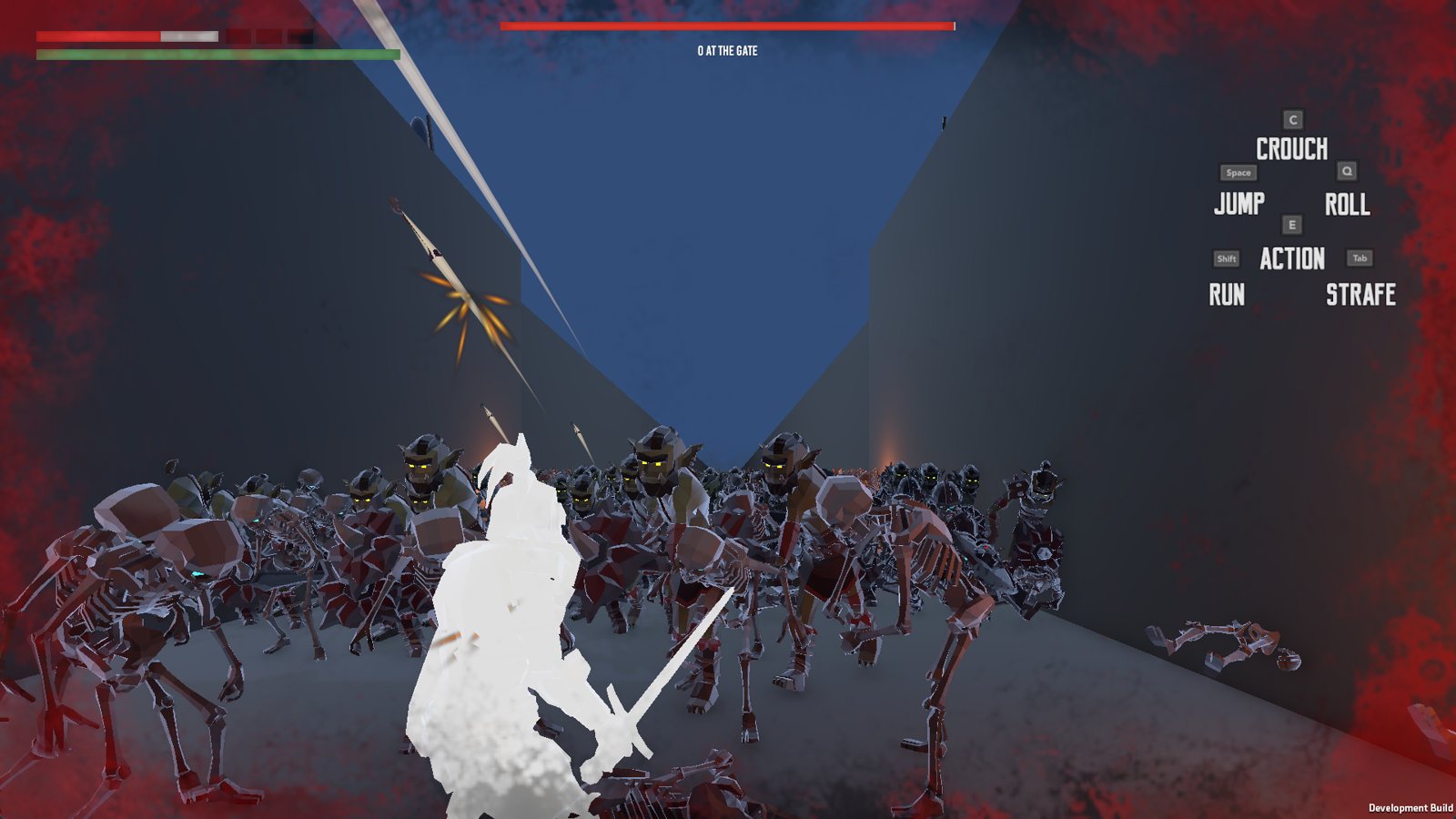
Hold The Pass is a third-person action horde defense game. When the light fails, the realm sends for the ones it cast out. You play one of those outcasts, holding a narrow mountain pass against a horde that vastly outnumbers you, while the traps and fortifications you build along the route decide whether the gate survives the night.
The release window is Q4 2027 to Q1 2028, on PC.
A word about the screenshots
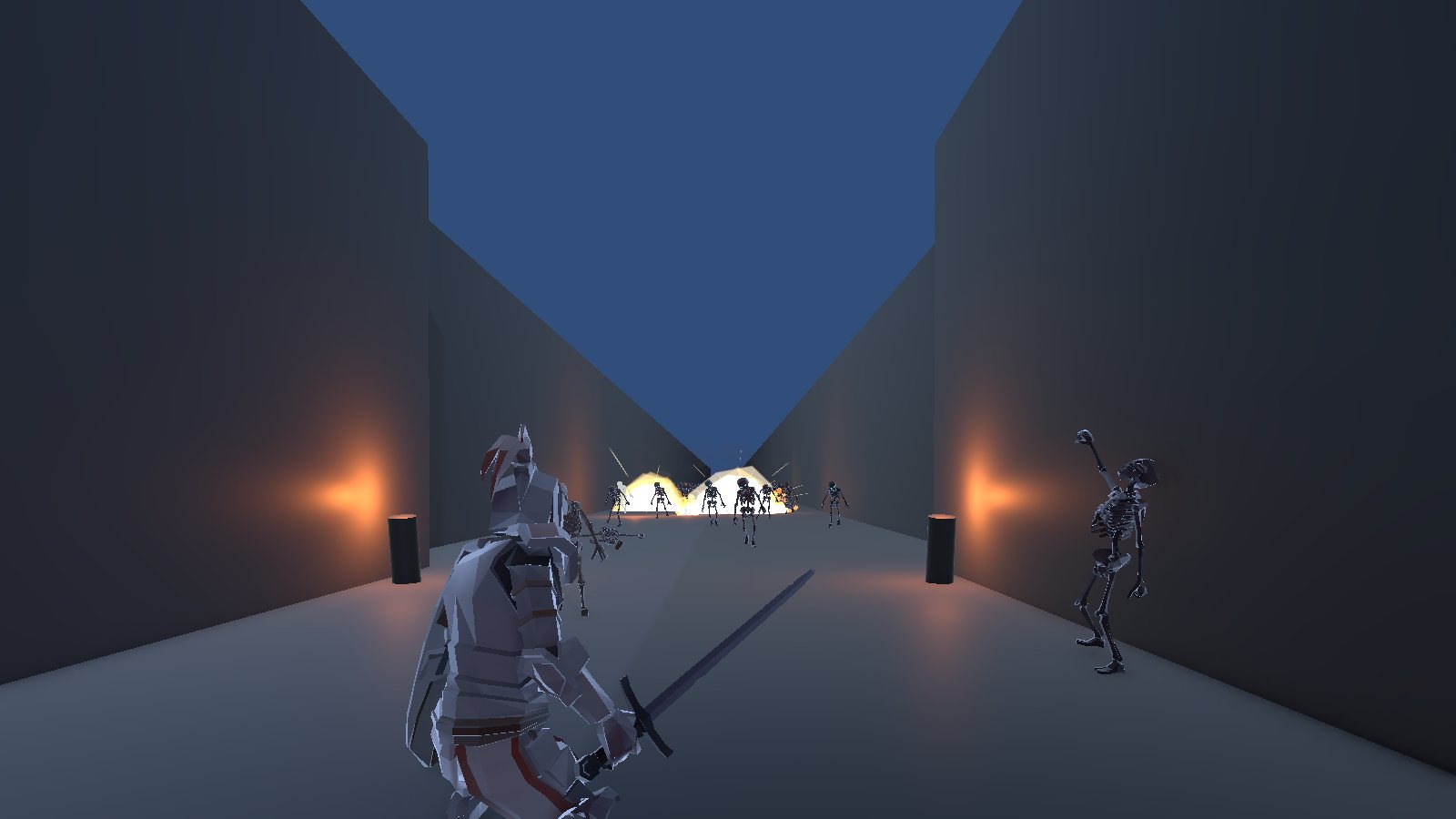
Everything you see in this post is greybox: placeholder walls, a flat sky, debug overlays, and stand-in models. That is deliberate. The question that decides whether this game works is not how it looks. It is how it feels, so that is what I built first. Art comes once the feel is proven.
What the game is about
Four pillars hold the design together:
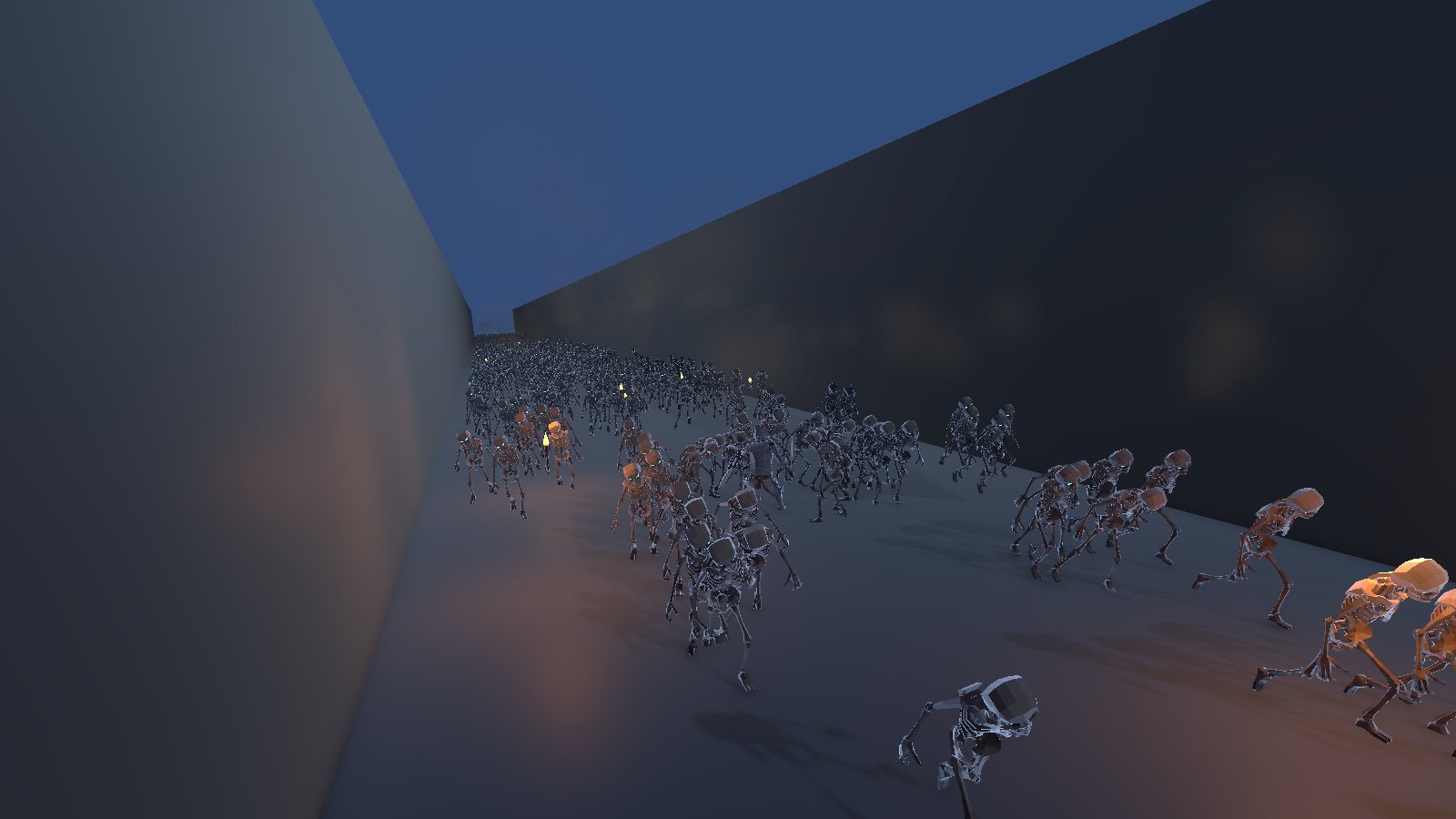
- A sea, not a swarm. Hundreds of enemies fill the pass at once. Only a handful reach your blade; the rest are a wall of bodies climbing toward the gate.
- Weight and impact. Every hit lands hard. Hit-stop and knockback throw the front rank back through its own lines.
- The chokepoint. One funnel-shaped pass. Where you place traps and fortifications along the route matters as much as how well you fight.
- The ones it cast out. The heroes are anti-heroes: people the realm fears and refused, and the only ones left standing at the gate when the light fails. The first two are the Dark Paladin and the Shadow Ranger (working titles).
A game is a run of nights on one map, each harder than the last. If you would rather see how far you can go, an infinite mode keeps the nights rising until the gate falls.
What already works
The prototype is playable end to end:
- The night loop. Timed nights against a gate with its own health. Enemies that slip past you damage it, and a breach ends the game.
- A mixed horde. Orc line troops, skeleton archers, and sappers that rush the walls and detonate.
- Defenders behind you. Placeholder wall archers and a trebuchet that fight alongside you.
- One stat sheet driving health, stamina, armour, damage, and knockback for every unit, so tuning happens in data rather than in code.
The hard part: the crowd
The horde is the point of the game, and it is also the hardest engineering problem in it. A few hundred fully simulated enemies, plus cheaper background bodies that make the pass look full, all on screen at once and still running smoothly while you swing a hammer through them.
This is where my background helps. Before Galdrcode made games, I spent years building backend systems that had to stay fast under heavy load. The same habits apply here: set a performance budget early, profile every change, and keep the expensive work off the main path. The horde has been profiled since the very first prototype build.
What's next
Picking the lead map, then moving the heroes from stand-in models to their real look. I will post here as each piece lands, greybox and all.
If you want to follow along or tell me what you would want from a game like this, come and say hello on Discord.